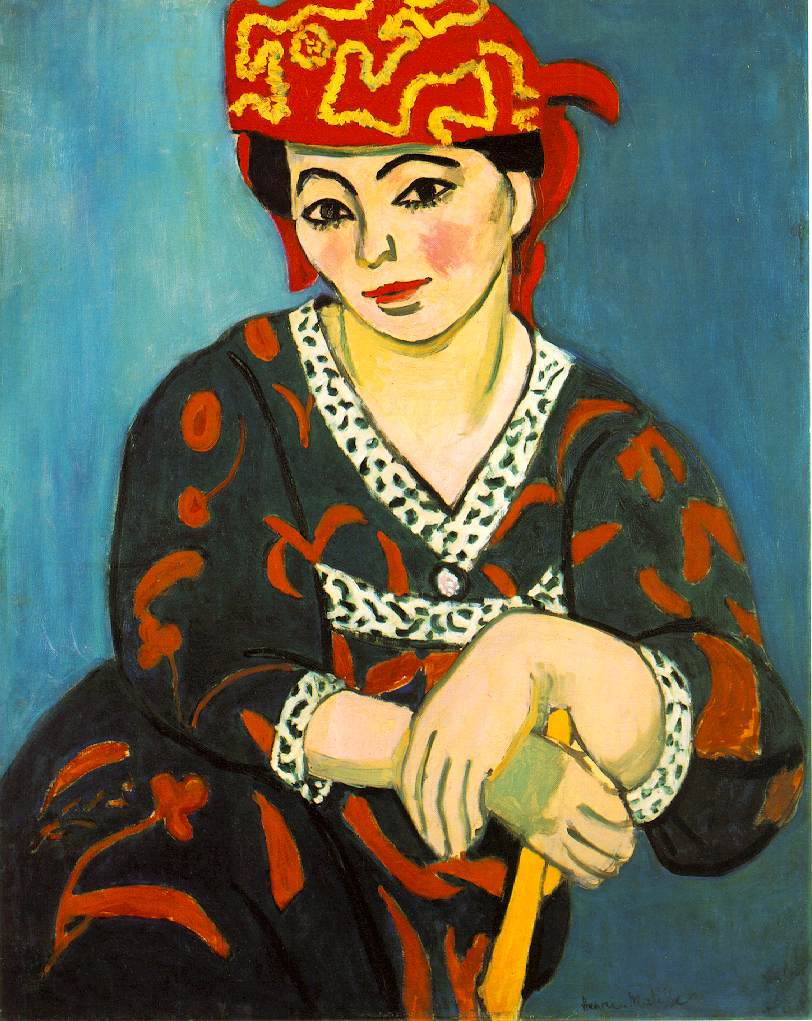
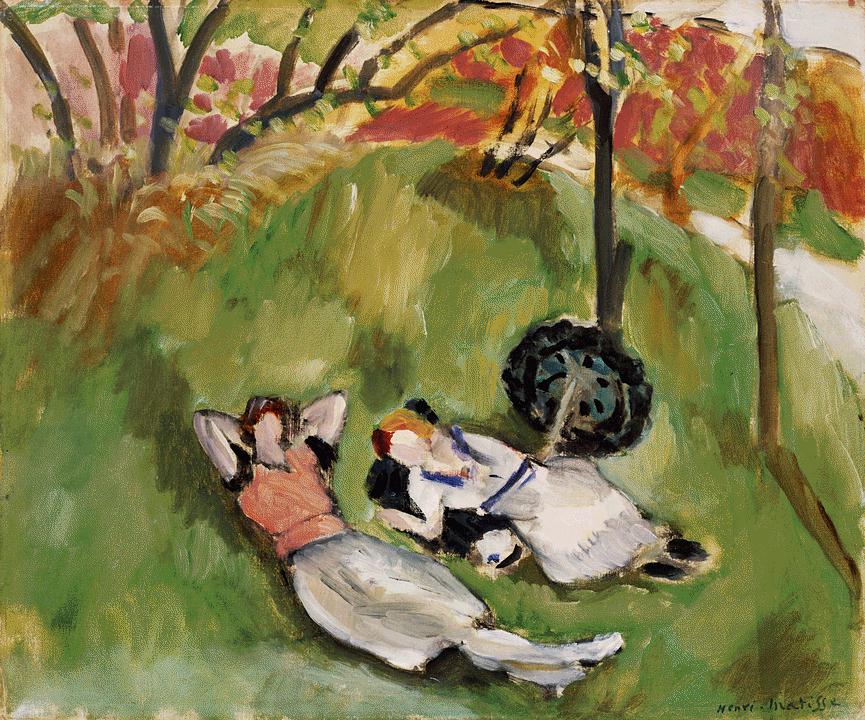
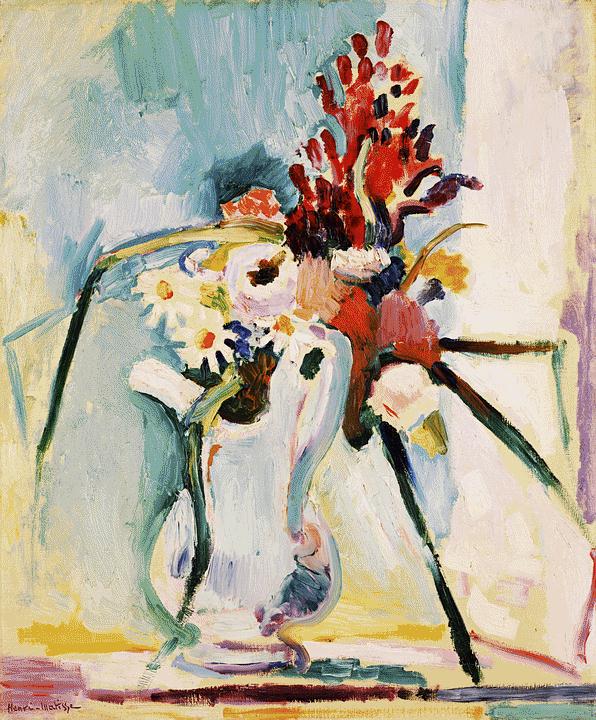
 Henri Matisse Flowers in a Pitcher 1906 Barnes Foundation Merion PA
Maurice Crossland’s article about popularization of science in nineteenth century France: Science and the Arts: challenges to authority in France under the Second Empire.
Scholars have meticulously studied the cultural and social dimensions of science of the Victorian period. Maurice Crossland’s article about science and the arts under the Second Empire is an important contribution to the popularization of science in France because it readers enables to draw comparisons between the popularization of science on both sides of the English Channel. Crossland draws similarities among science journalists, Impressionists, and “realist” novelists. Crossland argues that science writers carved a new full-time occupation to which they attached a counter-culture that threatened the authority of official science embodied in the Académie des Sciences. Their counter-culture consisted on translating technical science into more understandable language for a broad public interested in science. Moreover, science popularizers undermined the authority of the Académie des Sciences because they knew they had no chances to become members of the prestigious institution. Crossland follows the careers of three popularizers of science under the Second Empire and brings to light the way they carved out a full-time occupation; they were Frederic Moigno (1804-1884), Meunir (1817-1903), and Louis Figuier (1819-1894). The Academy was an easy target and at the same time to legitimate their role as science writers. Moreover, they strengthened solidarity ties that turned them into a self-conscious group who would threaten the authority of “official science”. Crossland also analyses the aims of science writers and their counter-culture. He stresses the similarities with other innovative movements: Impressionists and science fiction writer, particularly the figure of Jules Verne.
Crossland studies three science writers’ success because their articles, journals, and books were widely read by a broad audience. Their common feature is that the three of them worked as science correspondents for La Presse. Crossland argues that working as a science journalist in La Presse served as an apprenticeship for developing science writing as a pioneering occupation in France. The first science correspondent of La Presse was Frederic Moigno (1804-1884). He was a Jesuit mathematician that had to quit the order. In the need to make ends meet, he used his math knowledge to find a new job. He worked as a journalist at L’ Epoque until he was hired as science correspondent of La Presse from 1848 to 1851. Finally, he became an editor of the weekly science journal Cosmos. On the same lines, Victor Meunir (1817-1903) was a clerk who attended the science courses of Musée d’ Histoire Naturelle and Jacques Arago’s lectures too. He supported left wing politics. He replaced Moigno as a science correspondent of Le Presse from 1851 to 1855. Later, he founded his own journal named L’ Amis des sciences. Louis Figuier (1819-1894) took the place of Meunir post as science journalist in 1857. Figuier had been a professor at the School of Pharmacy at Montpellier and suffered from the academicians’ public humiliation. He quit his position at the university and started writing biographies of chemists. In 1857, Figuier launched his own journal called L’ Anee Scientific e Industrielle that became successful commercial enterprise in 1864. Moigno, Meunier, and Figuier were pioneers in fashioning a new role for science writers whose main features were to write a about science and to have a critical approach towards official science. Moreover, they gave shape to what a science writer was; a full-time occupation of which they could make ends meet.
Crossland demonstrates that the science writers developed both a critical outlook towards the Académie of Science and solidarity ties. Crossland gives strong evidence of science writers’ role as critics. Science writers started reporting the sessions of the Comtes Rendus - 1835 - and the meetings of the Académie. Unsatisfied with the reports of the Académie, their science writer’s task turned into an explicit criticism toward individuals or theories supported by the national body of science. This critical stand increased under the elitist and authoritarian Second Empire. For example, Figuier defended Pouchet and wrote that Pasteur was an uncritical scientist who preferred to be pampered and protected by the Academy. Popularization of science began in the press and the science writer’s aim was to destroy prejudices and attack false opinions. Their role, however, went beyond instruction and turned into criticism of the prestigious Académie of Sciences. Crossland draws an interesting parallelism in the method of publishing among science writers, artists, and novelists. Figuier, Moigno, Meunier, as well as Emile Zola, Alexander Dumas, Jorge Sand and Jules Verne, first published their works in newspapers and journals, lately they would become books. However, Crossland falters by asserting that this critical stance is evidence of solidarity ties. Moreover, the evidence of the solidarity ties grown out of the practice of a shared occupation is weak. Crossland asserts the science journalist’s camaraderie due to formal organizations and the sense of camaraderie. In 1857, Figuer founded the Cercle de la Presse Scientifique together with other two science journalists nevertheless they did not keep written records of their meetings. Two fellow science journalists: Lecouturier (Le Pays) and Felix Foubaud (L’Illustration). The three shared the goal of strengthening the links between science journalism and contributing to the progress of science. On the same lines the evidence for the feeling of solidarity are difficult to trace. Crossland asserts that the tribute that Figuier paid tribute to Moigno and Berthoud as the pioneers of science popularization is good evidence of their feelings of solidarity. I contend if undermining the authority of the Académie is evidence of solidarity ties.
Crossland isolates these groups as self-conscious. Furthermore, they build up a counter-culture that clashed with the official culture. Science writers’ goals were to write and sell their works about science to a broad public rather than to become members of the Académie. They were conscious of their role of outsiders, particularly Figuier who failed at his attempt to argue against a scientific theory held by the Académie. Freedom and independence from the Academy made up for the two main features of their counter-culture. Moreover, their identity was grounded on their popularity. Freedom was further more important than political stances. Therefore, their critical stance against the Académie led them to develop their counter-culture. Meunier was a socialist. Figuier backed Louis Napoleon Empire. Moigno preferred a Christian perspective of science. However, the Académie’s defined two strategies to counterbalance the popularity of science writer’s: academicians popularized science and the Academy organized public lectures named Soirées de la Sorbonne. Eventually, their articles, journals and books sold out; ordinary people accepted uncritically their writings. They could make a living out of science journalism in France.
Crossland’s main contribution is the similarities he finds among science writers, the Impressionist movement, and “realist” novelists. Crossland says that novelists, artists, and science writers shared lots of common places where they debated about politics, economics, art, science, literature and so on. Crossland focuses on the Impressionist movement and the figure of Jules Verne. The Académie des Beaux Arts rejected paintings that did not followed certain artistic standards. The Académie des Beaux Arts refused to exhibit Manet, Pissaro, Sisley, and Degas’ paintings. To counteract that, Louis Napoleon acted as a mediator between the academicians and the refusées and he requested the opening of a Salon des Refusés in 1863. In response, Manet suggested an Anti-salon in 1873. They refused to exhibit their painting in the Salon des Refusés because they had organized themselves under the name of Impressionists and had their own exhibition called Anti-Salon. Despite this, the Impressionists as well as the science writers undermined the official authority. They believed in their work and they turned to the public to legitimate their work rather to the traditional authorities. What is more, both artists and science writer were eager to relate to the public. They had found a new source of legitimacy. Despite the fact that there were similarities with novelists, Crossland argues that novelist had more independence than artists or science writers. Crossland emphasizes the figures of Emile Zola and Jules Verne despite the differences between them. Emile Zola was a strong critic of different kind of authorities: art, military, politics, and literature. Zola wrote articles supporting Manet’s works of art and also Cézanne’s. On different lines, Jules Verne (1828-1903) is important in Crossland’s eyes because of his ability to blend literature and science. Verne wrote science fiction. He was aware that his work would not be considered by the Académie. On the contrary, Zola presented his candidacy to the Academy, however he was always rejected. Zola’s case demonstrates that the Académise were still an important source of national recognition. Crossland highlights Verne’s coming across with Jacques Arago in 1850. He also asserts that Verne was a popularizer of science even if he did not intended to be so. Finally, Crossland asserts that Verne, the Impressionist, and science writers had in common to publish their first articles in newspapers and to have a strong belief that science led to progress. Despite all the political and purpose difference among the three groups, Crossland argues that for all of them science was a model to follow. Science led to progress; therefore ordinary people should be aware of science’s potential so as to improve their living standards and situation. The nineteenth century strongly believed that science equaled progress. Science hence became a symbol of civilization, progress, improvement, and future. Despite the opposition of science writers towards official science, their work could not be undermined because they popularized science as civilization and order.
Crossland’s science-writers distinguished from their English counterparts because they made a living out of their writings in the press and in print. A broad audience both read and was marveled by both English and French science writers. Furthermore, Crosland argues that science writes were a self-conscious group who developed solidarity ties and also undermined the scientific official culture. Crossland, hence argues that science writers moved forward into creating their own counter-culture which part of it was shared with novelists and artists. Their counter-culture opposed official science. Science writers found their legitimacy on its broad audience. On the contrary, official science’s legitimacy was grounded on their respective science communities and on the Académies’s recognition. Eventually, Crossland’s main contribution is to show the intermingling among science writers, Impressionists, and novelists in France’s Second Empire. However, he does not convey the social atmosphere of French society: the importance of meeting in cafes, literary circles, social gatherings, or artistic exhibitions. Crossland mentions how Arago could have influence Verne, however their meeting and influencing each other is not the important issue to convey. Humanistic entertainment flowed France’s intellectual life. Intellectual life was not divided into scientific division; on the contrary novelist feed and learns from science writers and artists in a common ground such a café or a party. Sometimes, intellectual events get mixed with social events; a tradition that goes back to the salons of the seventeenth century. Rather than breaking up novelists, Impressionists from science writers, Crossland could have portrayed them as an intellectual counter-culture devoted to different interests. On the other hand, he makes a sharp distinction between official-culture and counter-culture. Nevertheless, he could have related a growing counter-culture and the politics of the Second Empire. The Seconde Empire created new images and representations of science, art, government, and science. If the Académie was state-sponsored, what was the academician’s purpose: change, innovate, or go back to previous artistic movements? What are the relationships with Louis Napoleon both conservative but also liberal government? Why would Louis Napoleon become a broker between the Académie des Beaux Arts and the Impressionists? Crossland misses the values and norms of science of both the intellectual life and the government. What were science writers, novelists, and Impressionists reaction to? Crossland asserts that most of them were undermining the authority of the National Institutes. However, the National institutes were state-sponsored so the link among state, academic bodies and new artistic and scientific movements deserves further research.
Georgetown University
Department of History
Scholars have meticulously studied the cultural and social dimensions of science of the Victorian period. Maurice Crossland’s article about science and the arts under the Second Empire is an important contribution to the popularization of science in France because it readers enables to draw comparisons between the popularization of science on both sides of the English Channel. Crossland draws similarities among science journalists, Impressionists, and “realist” novelists. Crossland argues that science writers carved a new full-time occupation to which they attached a counter-culture that threatened the authority of official science embodied in the Académie des Sciences. Their counter-culture consisted on translating technical science into more understandable language for a broad public interested in science. Moreover, science popularizers undermined the authority of the Académie des Sciences because they knew they had no chances to become members of the prestigious institution. Crossland follows the careers of three popularizers of science under the Second Empire and brings to light the way they carved out a full-time occupation; they were Frederic Moigno (1804-1884), Meunir (1817-1903), and Louis Figuier (1819-1894). The Academy was an easy target and at the same time to legitimate their role as science writers. Moreover, they strengthened solidarity ties that turned them into a self-conscious group who would threaten the authority of “official science”. Crossland also analyses the aims of science writers and their counter-culture. He stresses the similarities with other innovative movements: Impressionists and science fiction writer, particularly the figure of Jules Verne.
Crossland studies three science writers’ success because their articles, journals, and books were widely read by a broad audience. Their common feature is that the three of them worked as science correspondents for La Presse. Crossland argues that working as a science journalist in La Presse served as an apprenticeship for developing science writing as a pioneering occupation in France. The first science correspondent of La Presse was Frederic Moigno (1804-1884). He was a Jesuit mathematician that had to quit the order. In the need to make ends meet, he used his math knowledge to find a new job. He worked as a journalist at L’ Epoque until he was hired as science correspondent of La Presse from 1848 to 1851. Finally, he became an editor of the weekly science journal Cosmos. On the same lines, Victor Meunir (1817-1903) was a clerk who attended the science courses of Musée d’ Histoire Naturelle and Jacques Arago’s lectures too. He supported left wing politics. He replaced Moigno as a science correspondent of Le Presse from 1851 to 1855. Later, he founded his own journal named L’ Amis des sciences. Louis Figuier (1819-1894) took the place of Meunir post as science journalist in 1857. Figuier had been a professor at the School of Pharmacy at Montpellier and suffered from the academicians’ public humiliation. He quit his position at the university and started writing biographies of chemists. In 1857, Figuier launched his own journal called L’ Anee Scientific e Industrielle that became successful commercial enterprise in 1864. Moigno, Meunier, and Figuier were pioneers in fashioning a new role for science writers whose main features were to write a about science and to have a critical approach towards official science. Moreover, they gave shape to what a science writer was; a full-time occupation of which they could make ends meet.
Crossland demonstrates that the science writers developed both a critical outlook towards the Académie of Science and solidarity ties. Crossland gives strong evidence of science writers’ role as critics. Science writers started reporting the sessions of the Comtes Rendus - 1835 - and the meetings of the Académie. Unsatisfied with the reports of the Académie, their science writer’s task turned into an explicit criticism toward individuals or theories supported by the national body of science. This critical stand increased under the elitist and authoritarian Second Empire. For example, Figuier defended Pouchet and wrote that Pasteur was an uncritical scientist who preferred to be pampered and protected by the Academy. Popularization of science began in the press and the science writer’s aim was to destroy prejudices and attack false opinions. Their role, however, went beyond instruction and turned into criticism of the prestigious Académie of Sciences. Crossland draws an interesting parallelism in the method of publishing among science writers, artists, and novelists. Figuier, Moigno, Meunier, as well as Emile Zola, Alexander Dumas, Jorge Sand and Jules Verne, first published their works in newspapers and journals, lately they would become books. However, Crossland falters by asserting that this critical stance is evidence of solidarity ties. Moreover, the evidence of the solidarity ties grown out of the practice of a shared occupation is weak. Crossland asserts the science journalist’s camaraderie due to formal organizations and the sense of camaraderie. In 1857, Figuer founded the Cercle de la Presse Scientifique together with other two science journalists nevertheless they did not keep written records of their meetings. Two fellow science journalists: Lecouturier (Le Pays) and Felix Foubaud (L’Illustration). The three shared the goal of strengthening the links between science journalism and contributing to the progress of science. On the same lines the evidence for the feeling of solidarity are difficult to trace. Crossland asserts that the tribute that Figuier paid tribute to Moigno and Berthoud as the pioneers of science popularization is good evidence of their feelings of solidarity. I contend if undermining the authority of the Académie is evidence of solidarity ties.
Crossland isolates these groups as self-conscious. Furthermore, they build up a counter-culture that clashed with the official culture. Science writers’ goals were to write and sell their works about science to a broad public rather than to become members of the Académie. They were conscious of their role of outsiders, particularly Figuier who failed at his attempt to argue against a scientific theory held by the Académie. Freedom and independence from the Academy made up for the two main features of their counter-culture. Moreover, their identity was grounded on their popularity. Freedom was further more important than political stances. Therefore, their critical stance against the Académie led them to develop their counter-culture. Meunier was a socialist. Figuier backed Louis Napoleon Empire. Moigno preferred a Christian perspective of science. However, the Académie’s defined two strategies to counterbalance the popularity of science writer’s: academicians popularized science and the Academy organized public lectures named Soirées de la Sorbonne. Eventually, their articles, journals and books sold out; ordinary people accepted uncritically their writings. They could make a living out of science journalism in France.
Crossland’s main contribution is the similarities he finds among science writers, the Impressionist movement, and “realist” novelists. Crossland says that novelists, artists, and science writers shared lots of common places where they debated about politics, economics, art, science, literature and so on. Crossland focuses on the Impressionist movement and the figure of Jules Verne. The Académie des Beaux Arts rejected paintings that did not followed certain artistic standards. The Académie des Beaux Arts refused to exhibit Manet, Pissaro, Sisley, and Degas’ paintings. To counteract that, Louis Napoleon acted as a mediator between the academicians and the refusées and he requested the opening of a Salon des Refusés in 1863. In response, Manet suggested an Anti-salon in 1873. They refused to exhibit their painting in the Salon des Refusés because they had organized themselves under the name of Impressionists and had their own exhibition called Anti-Salon. Despite this, the Impressionists as well as the science writers undermined the official authority. They believed in their work and they turned to the public to legitimate their work rather to the traditional authorities. What is more, both artists and science writer were eager to relate to the public. They had found a new source of legitimacy. Despite the fact that there were similarities with novelists, Crossland argues that novelist had more independence than artists or science writers. Crossland emphasizes the figures of Emile Zola and Jules Verne despite the differences between them. Emile Zola was a strong critic of different kind of authorities: art, military, politics, and literature. Zola wrote articles supporting Manet’s works of art and also Cézanne’s. On different lines, Jules Verne (1828-1903) is important in Crossland’s eyes because of his ability to blend literature and science. Verne wrote science fiction. He was aware that his work would not be considered by the Académie. On the contrary, Zola presented his candidacy to the Academy, however he was always rejected. Zola’s case demonstrates that the Académise were still an important source of national recognition. Crossland highlights Verne’s coming across with Jacques Arago in 1850. He also asserts that Verne was a popularizer of science even if he did not intended to be so. Finally, Crossland asserts that Verne, the Impressionist, and science writers had in common to publish their first articles in newspapers and to have a strong belief that science led to progress. Despite all the political and purpose difference among the three groups, Crossland argues that for all of them science was a model to follow. Science led to progress; therefore ordinary people should be aware of science’s potential so as to improve their living standards and situation. The nineteenth century strongly believed that science equaled progress. Science hence became a symbol of civilization, progress, improvement, and future. Despite the opposition of science writers towards official science, their work could not be undermined because they popularized science as civilization and order.
Crossland’s science-writers distinguished from their English counterparts because they made a living out of their writings in the press and in print. A broad audience both read and was marveled by both English and French science writers. Furthermore, Crosland argues that science writes were a self-conscious group who developed solidarity ties and also undermined the scientific official culture. Crossland, hence argues that science writers moved forward into creating their own counter-culture which part of it was shared with novelists and artists. Their counter-culture opposed official science. Science writers found their legitimacy on its broad audience. On the contrary, official science’s legitimacy was grounded on their respective science communities and on the Académies’s recognition. Eventually, Crossland’s main contribution is to show the intermingling among science writers, Impressionists, and novelists in France’s Second Empire. However, he does not convey the social atmosphere of French society: the importance of meeting in cafes, literary circles, social gatherings, or artistic exhibitions. Crossland mentions how Arago could have influence Verne, however their meeting and influencing each other is not the important issue to convey. Humanistic entertainment flowed France’s intellectual life. Intellectual life was not divided into scientific division; on the contrary novelist feed and learns from science writers and artists in a common ground such a café or a party. Sometimes, intellectual events get mixed with social events; a tradition that goes back to the salons of the seventeenth century. Rather than breaking up novelists, Impressionists from science writers, Crossland could have portrayed them as an intellectual counter-culture devoted to different interests. On the other hand, he makes a sharp distinction between official-culture and counter-culture. Nevertheless, he could have related a growing counter-culture and the politics of the Second Empire. The Seconde Empire created new images and representations of science, art, government, and science. If the Académie was state-sponsored, what was the academician’s purpose: change, innovate, or go back to previous artistic movements? What are the relationships with Louis Napoleon both conservative but also liberal government? Why would Louis Napoleon become a broker between the Académie des Beaux Arts and the Impressionists? Crossland misses the values and norms of science of both the intellectual life and the government. What were science writers, novelists, and Impressionists reaction to? Crossland asserts that most of them were undermining the authority of the National Institutes. However, the National institutes were state-sponsored so the link among state, academic bodies and new artistic and scientific movements deserves further research.
Georgetown University
Department of History